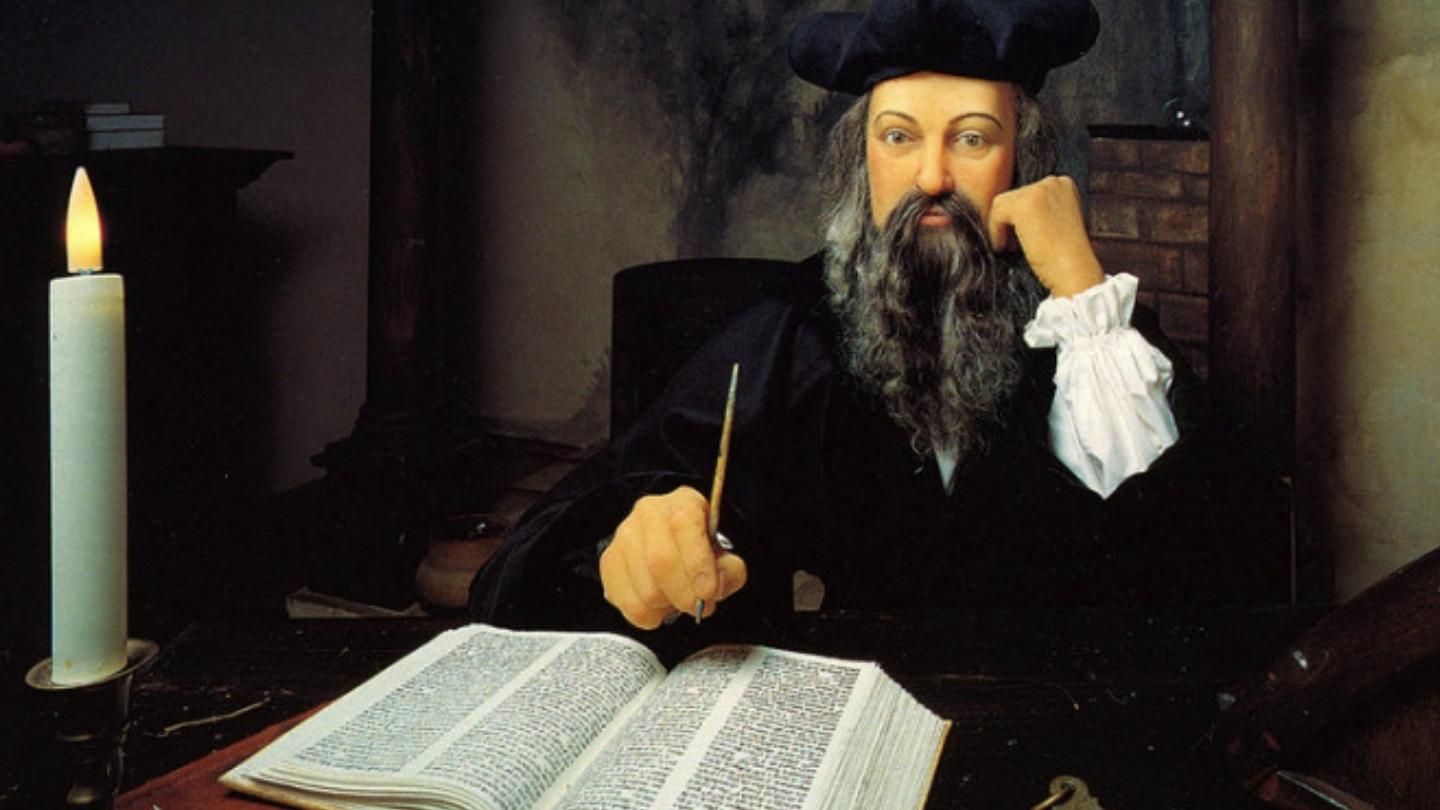
Nostradamus is one of history’s most famous (or infamous) names, a man whose quatrains have been interpreted to explain everything from plagues to presidential haircuts.
Behind that mystique, however, lies a simpler explanation: he didn’t live in a vacuum.
Renaissance scholars, astrologers, and chroniclers were a rich intellectual crowd. And Nostradamus drew from them, willingly or otherwise.
Before we dive into the alleged borrowings, let’s clear one thing up:
“Plagiarism,” in the modern sense, didn’t exist in the 16th century.
Copying, paraphrasing, and building on earlier texts was normal practice, especially in scholarly, medical, and prophetic works.
So if we are being really honest, calling Nostradamus a “plagiarist” is anachronistic. But he definitely drew heavily from earlier sources.
With that in mind, here are 3 to 5 thinkers and works whose ideas or texts seem to have influenced his prophetic writings, intentionally or through intellectual tradition.
1. Mirabilis Liber (1522) – The Prophecy Anthology That Led the Pack
One of the most discussed sources related to Nostradamus’ prophetic style is the Mirabilis Liber, a collection of apocalyptic predictions that circulated across Europe in the early 1500s.
What It Was
This Latin text gathered prophecies from a number of earlier figures into a single compendium, including Pseudo‑Methodius, the Tiburtine Sibyl, Joachim of Fiore, and even Savonarola.
Why It Matters
- Nostradamus was one of the first to re‑paraphrase these prophecies into French, expanding their reach.
- His own quatrains echo themes, imagery, and structure found in these earlier prophetic traditions.
Whether he was borrowing or simply translating and reworking these earlier apocalyptic voices is open to interpretation, but the influence is clear.
2. Classical Historians – Livy, Suetonius, and Plutarch
Nostradamus didn’t stop with medieval prophecy. He also tapped into ancient history, not to resurrect dusty tales, but to make his predictions seem timeless.
Classical historians like Livy, Suetonius, and Plutarch provided historical narratives of emperors, wars, and collapses that Nostradamus sometimes referenced or echoed in his quatrains.
Why does this matter?
These works pre‑dated Nostradamus by well over a millennium, so any resemblance suggests borrowing, reinterpretation, or adaptation…not supernatural insight.
This is one reason skeptics argue that Nostradamus wasn’t predicting the future so much as recycling patterns from the past that he expected to repeat.
3. Richard Roussat and the “Astrological Library”
While not ancient, Richard Roussat and his work Livre de l’estat et mutations des temps (The Book of the State and Mutations of Times) was another contemporary source for Nostradamus’ quatrains.
Published around 1550, this popular astrological guide was part of a rich conversation about time, fate, and celestial influence. These were the very themes Nostradamus leveraged in Les Prophéties.
Theories about this influence include:
- Nostradamus used material from this work in relation to planetary configurations and astrological timing.
- It may help explain how his quatrains married ancient themes to Renaissance celestial lore.
In other words, it wasn’t all mystical inspiration. Sometimes it was meteorological manuscript swapping.
4. Petrus Crinitus and Neo‑Platonic Mysticism
One lesser‑known name in his list of influences is the Italian humanist Petrus Crinitus (1474–1507).
Who He Was
Crinitus was a Florentine scholar whose book De honesta disciplina contained extracts from earlier esoteric and philosophical works, including De daemonibus by Michael Psellos.
Why This Matters
- Some of these extracts appear to be paraphrased in Nostradamus’ early verses, especially material linked to ancient magic and cosmology.
- While not a direct plagiarism, this shows that Renaissance intellectual currents (including Platonic, Neo‑Platonic, and mystical traditions) filtered through multiple writers before reaching Nostradamus.
5. Iamblichus and the Mysteries of Egypt
Another source that seems to have left its imprint (indirectly) is the De Mysteriis Aegyptiorum (On Egyptian Mysteries) by Iamblichus, a 4th‑century Neo‑Platonist.
Translated into Latin and circulating in Renaissance libraries, this work was a foundational text in discussions of ancient spirituality, gods, and the unseen world.
Nostradamus appears to have paraphrased parts of it in his early quatrains, again suggesting intellectual borrowing rather than prophetic epiphany.
This doesn’t make him a fraud. It makes him a Renaissance man navigating the intellectual currents of his time.
So Was It Plagiarism…Or Something Else?
Here’s the key nuance:
Modern Plagiarism = Using someone else’s words without credit, with intent to deceive.
16th‑Century Practice = Building on existing texts and themes, often without direct attribution.
In Nostradamus’ day:
- Texts were manually copied and reused.
- Borders between authorship, commentary, and translation were fluid.
- Renaissance intellectual culture expected writers to base work on older texts.
In other words, Nostradamus was doing what writers did at the time including interpreting, adapting, re‑presenting existing material in a new form.
Whether you see that as creative or derivative depends on your definition.
While it’s tempting to say he “borrowed” or “plagiarised,” a better description is that he participated in a tradition of synthesis. This included blending prophecy, history, astrology, and classical wisdom into poetic quatrains.
Why Does This Matter Today?
For a modern reader (especially who has lived through decades of Nostradamus hype), understanding these sources:
- Helps separate the man and his methods from the myth.
- Shows that the quatrains weren’t plucked from thin air. They were rooted in texts circulating in Renaissance Europe.
- Explains why interpretations of his quatrains can be so flexible: they were built on common intellectual currency rather than specific, dated predictions.
Whether Nostradamus was a creative synthesiser of ideas, an early compiler of prophetic traditions, or a Renaissance poet with an astrological flair, one thing is clear:
His quatrains are far less supernatural and far more grounded in the intellectual debates and writings of his time than many legends suggest.
In the next part of this series, we will explore the more personal side of Nostradamus’ life, including his use of remedies, herbal substances, and the role of visions, to ask the provocative question of whether he was, in effect, “high on his own supply.”